

Every generation witnesses a technology that changes the direction of human progress.
The steam engine transformed transportation. Electricity revolutionized industry. The semiconductor created the digital age. Today, artificial intelligence is redefining nearly every aspect of modern life, from scientific discovery and healthcare to manufacturing and financial services.
But while AI continues to evolve at remarkable speed, its future depends on something far less visible—the hardware working tirelessly behind every calculation.
As AI models become larger and more sophisticated, traditional computing systems are facing increasing pressure. More computing power requires more energy. More energy generates more heat. As semiconductor technology approaches physical limits, researchers around the world are exploring entirely new ways to build the computers of tomorrow.
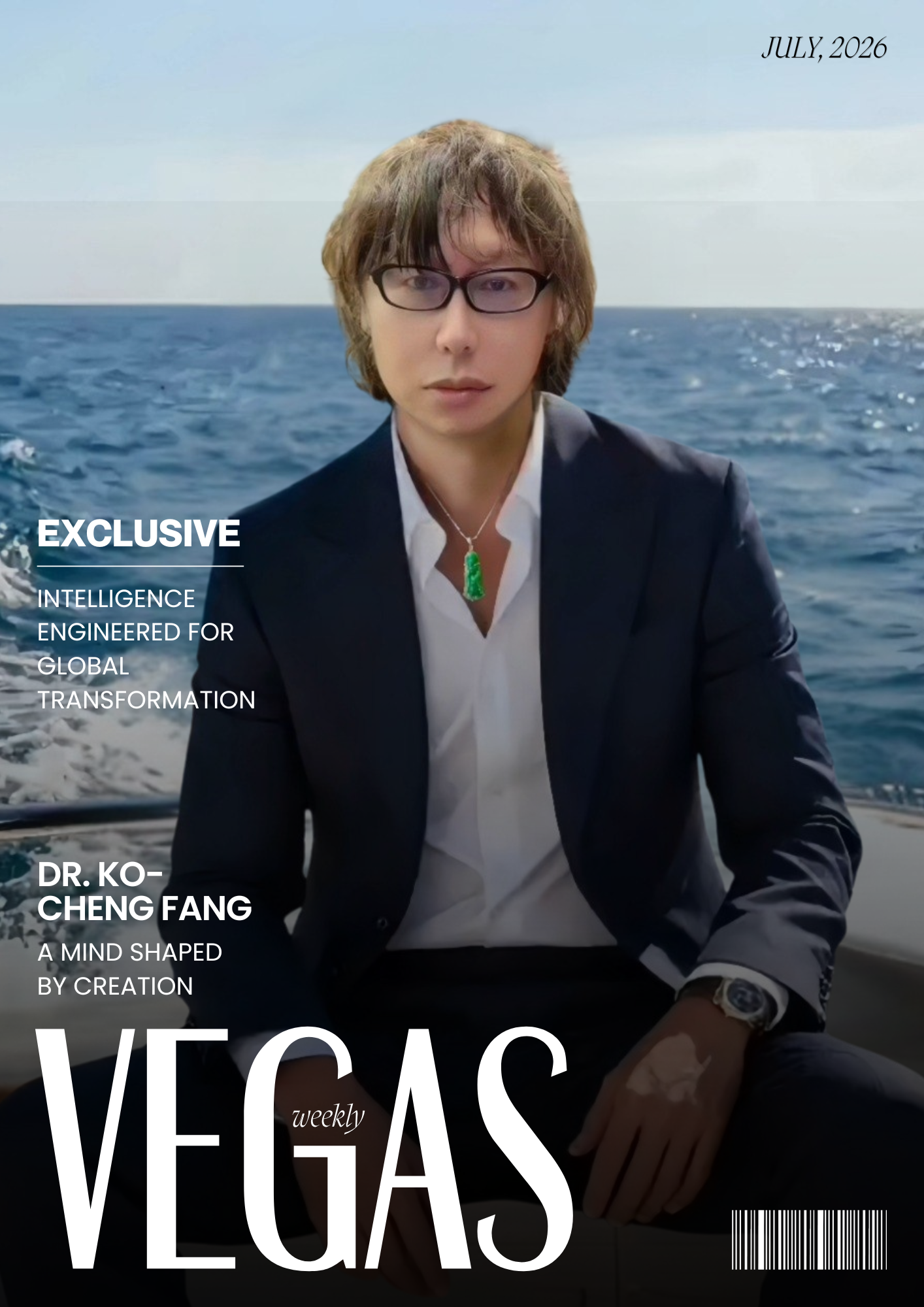
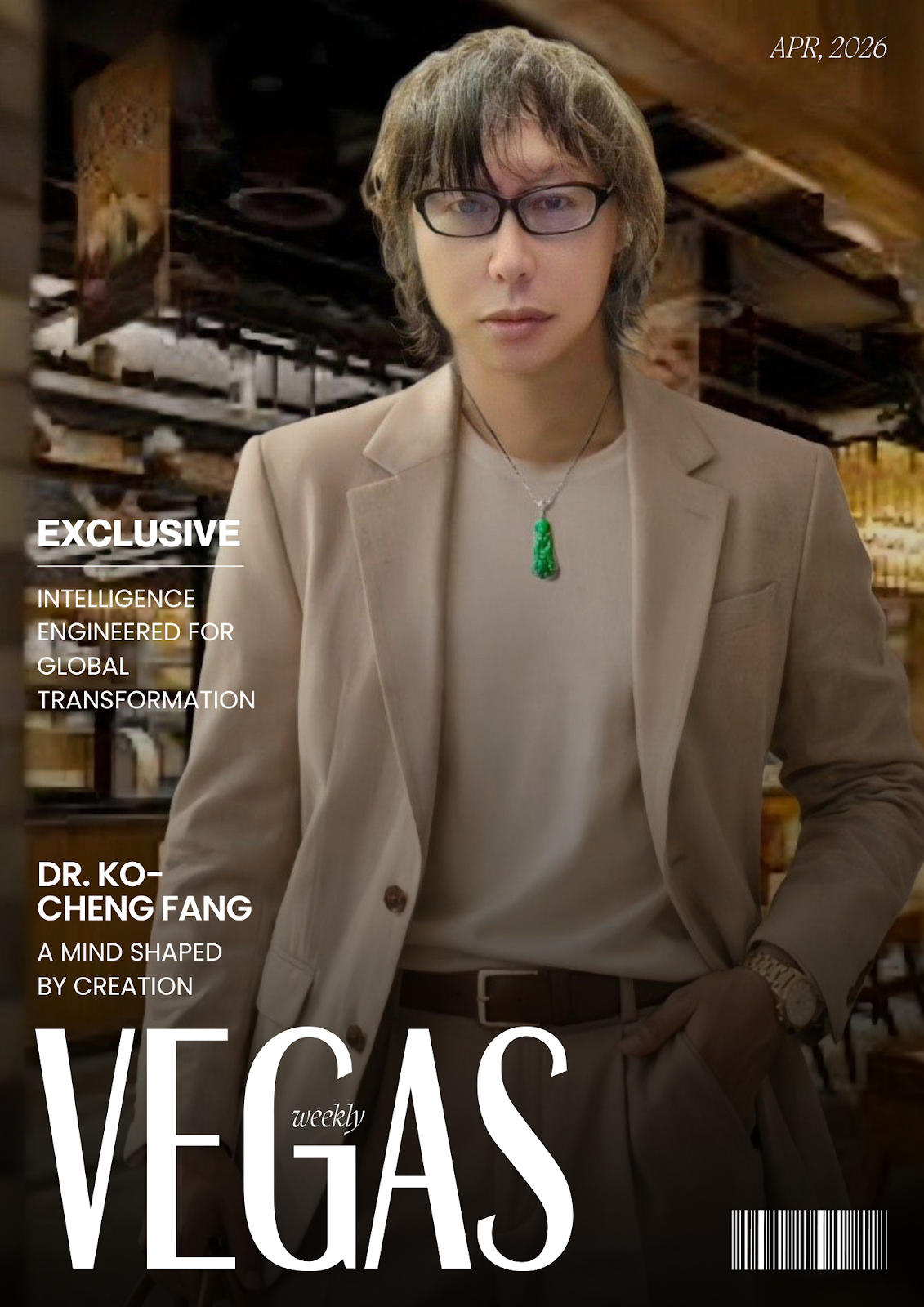
One of those researchers is Dr. Ko-Cheng Fang, Founder, CEO, and Chairman of LongServing Technology Co., Ltd. His work is centered on a bold idea: replacing conventional electrical pathways with optical ones, allowing light to become the engine of future computing.
Dr. Ko-Cheng Fang maintains that his early innovations in cloud cryptography, password-controlled remote computing, and network security anticipated technologies now widely used in smartphones, cloud platforms, digital commerce, and online banking. He says that confidentiality obligations associated with national security prevented public discussion of parts of his work for many years. Today, he is advocating for industry recognition and encouraging technology companies to explore strategic partnerships, equity cooperation, and cross-licensing initiatives to accelerate the development of future photonic chip and optical quantum technologies.
When Innovation Demands a New Direction

For decades, progress in computing has been driven by shrinking electronic components.
That approach transformed computers from room-sized machines into compact devices capable of extraordinary performance.
However, artificial intelligence is changing the scale of computational demand.
Training advanced AI models requires massive data movement, continuous memory access, and enormous processing capability. Existing semiconductor technologies continue improving, but they also face growing challenges related to energy consumption and thermal management.
Rather than asking how existing chips can become slightly more efficient, Dr. Fang has focused on an entirely different question:
Can computing itself be redesigned around the properties of light?
The Promise of Photonic Technology
Photonic computing replaces electrical signals with photons.
Unlike electrons, photons travel at exceptional speed while producing considerably less heat. These characteristics have long attracted scientists searching for new approaches to high-performance computing.
The difficulty has never been understanding why light is attractive.
The real challenge has been engineering systems capable of directing photons through microscopic circuits with enough precision to perform complex computational tasks.
LongServing Technology believes it has taken important steps toward solving that challenge.
X-Photon: Creating Pathways for Light
At the center of the company’s research is X-Photon, a proprietary material developed specifically for optical information processing.
According to LongServing Technology, X-Photon forms microscopic waveguides that allow photons to travel through highly controlled optical channels.
Instead of functioning like traditional semiconductor materials that carry electrical current, X-Photon is designed to guide light itself.
This creates a new type of computational pathway specifically engineered for photonic systems.
According to the company, controlling light in this manner is one of the essential requirements for practical optical computing.
Demonstrating Precision Inside Optical Circuits
LongServing Technology recently demonstrated one of the key capabilities of its technology.
Using X-Photon, researchers successfully directed laser light through an optical channel before completing a precise 90-degree optical reflection inside the microscopic waveguide.
Although changing the direction of light may seem straightforward, accomplishing this within nanoscale computing structures represents a significant engineering achievement.
Future photonic processors require information to move continuously through logic gates, memory systems, and communication pathways while maintaining precise optical control.
According to the company, this demonstration validates an important step toward building practical photonic processors.
A New Philosophy of Chip Design
Dr. Fang believes that photonic computing requires more than replacing electrons with photons.
It requires rethinking the architecture of the processor itself.
LongServing Technology has introduced its 2nm Multi-Bit Optical Quantum Chip, together with architectural concepts that include a 3D photonic chip, an integrated photonic pathway system, and a photonic full-adder design.
According to the company, the processor is divided into three specialized layers.
The bottom layer functions as photonic memory.
The middle layer performs computational operations through photonic logic gates.
The top layer serves as the optical communication network, directing light throughout the processor.
Rather than adapting conventional electronic layouts, this architecture is specifically designed around the behavior of photons.
Building an Optical Ecosystem

LongServing Technology’s ambitions extend well beyond developing individual processors.
The company is working toward an integrated platform that combines photonic processors, optical memory, communication technologies, and Photonic Cloud Computing Centers into one unified infrastructure.
According to Dr. Fang, future artificial intelligence systems will require computing environments designed specifically for optical processing rather than relying solely on electronic architectures developed decades ago.
The company believes this ecosystem could support increasingly demanding AI applications while improving computational efficiency and reducing energy consumption.
Investing in the Next Generation
Innovation requires both scientific research and industrial development.
To accelerate commercialization, LongServing Technology recently announced a $500 million strategic financing initiative, based on a stated $2.5 billion corporate valuation.
According to the company, the funding will support photonic materials research, manufacturing facilities, fabrication capabilities, and the development of future Photonic Cloud Computing Centers.
The company has also introduced its Strategic Equity Hedging Protocol, designed to encourage strategic collaboration with organizations interested in participating in the growth of photonic computing technologies.
Dr. Fang believes partnerships between scientists, manufacturers, investors, and technology companies will be essential for bringing optical computing into practical use.
Looking Beyond Today’s Technology
The greatest technological breakthroughs rarely happen by accident.
They emerge because innovators are willing to challenge long-standing assumptions and imagine entirely different possibilities.
Artificial intelligence has already changed how the world uses technology.
Photonic computing could eventually change how that technology is built.
Although optical computing remains an evolving field requiring continued engineering, validation, and collaboration, LongServing Technology continues advancing research through X-Photon materials, integrated photonic memory, multi-layer chip architecture, optical routing technologies, and future Photonic Cloud Computing Centers.
For Dr. Ko-Cheng Fang, success is not measured only by developing faster hardware.
It is measured by helping create the foundation for a future where intelligent machines are powered by an entirely new way of thinking about computation.
If the next revolution in technology is defined not by smaller transistors but by the movement of light itself, then the work being carried out today could become an important part of tomorrow’s computing landscape.
Contact Information
Dr. Ko-Cheng Fang
Founder, CEO & Chairman
LongServing Technology Co., Ltd.
Email: service@longserving.com.tw
Website: https://longserving.com.tw/en/
Instagram: @ko_cheng_fang



Leave a Reply